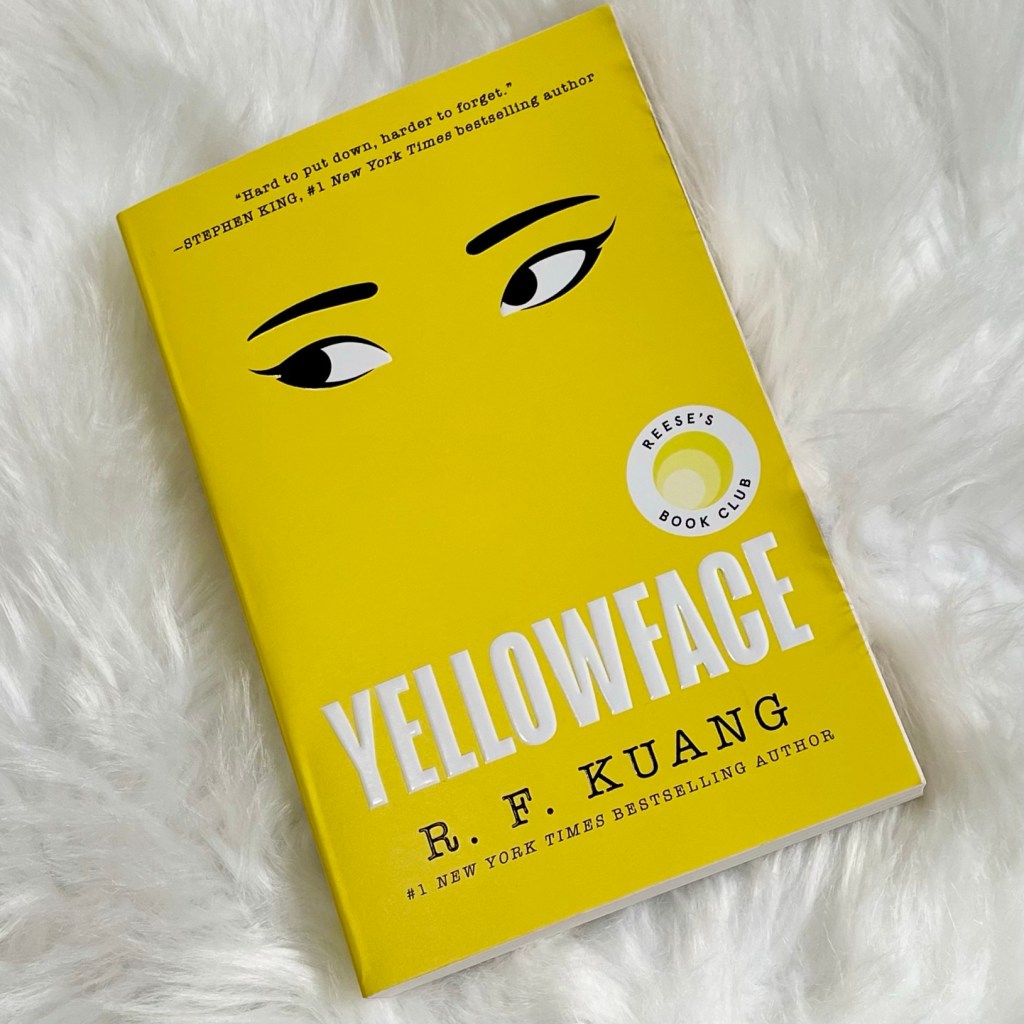
Yellowface by R.F. Kuang
A Five-Star Book
Yellowface by R.F. Kuang has been on my to-be-read lift for a long time. It’s gotten a lot of hype since its 2023 release, and I fully agree that the book is worth the praise. Reading Yellowface in April 2025 felt apropos as the U.S. is failing to embrace any type of diversity and so-called country leaders are dividing more than uniting. I would have enjoyed this book at any time, but right now Yellowface hit an even stronger emotional tone.
Summary of Yellowface (No Spoilers)
Ever since their time at university, Junie Hayward and Athena Liu were frenemies dancing around each other in the Yale literary circles. But Junie’s jealousy is at an all-time high now that Athena’s success is confirmed with a Netflix deal and continued buzz about her novels. After all, Junie’s only book didn’t meet sales expectations and her mom continues to remind her that getting an accountant’s license like her sister would not be a bad career move. Nonetheless, Junie agrees to celebrate Athena’s triumph on a night out, one that goes terribly wrong. By the end of that night, Athena is dead and Junie has her hand on the much-anticipated, yet-unseen manuscript by her dead frenemy.
Yellowface follows Junie, now rebranded as Juniper Song, as she takes inspiration from Athena’s work and builds her own success upon it. She and her publishing team work to justify a white American woman’s historical fiction book about the Chinese Labour Camps in World War I. With Twitter (yes, Twitter) on fire about the caliber of the novel and Juniper’s race and validity in writing the book, she grows obsessed and even more guilty. Plus, what happens when Juniper is expected to publish her next bestseller?
If anyone criticizes me for imitating her work, they’re coming after a friend who’s still in mourning, which makes them a monster. Athena, the dead muse. And I, the grieving friend, haunted by her spirit, unable to write without invoking her voice.
Yellowface by R.F Kuang
Page 48
What I Enjoyed about Yellowface
Yellowface will likely be one of my favorite reads of 2025. Here is why:
- Junie / Juniper: Junie may not have been as successful in publishing as Athena, but Yellowface’s narrator is an exceptional, creative and immoral lead character. She can rationalize any of her behaviors, from plagiarism to lying. Junie is a crafty, self-aware character, too: she thinks quickly and uses her intelligence to achieve her goals. Throughout the book, I wanted Junie to do the right thing, but I enjoyed reading about her bad choices. She is so unbalanced by the end of the book, she is nearly a sympathetic character, but not quite.
- Social Media Commentary: Yellowface made me miss old Twitter, so I envisioned most of the social media posts on Instagram. I love-hated how precise Ms. Kuang was in describing the unhinged nature of social media. Junie’s reports of death threats and harassment were disturbing, but the sad part is that we know that’s not fiction. Social media is taken far too seriously and carries lasting effects on users.
- Racism & Cultural Appropriation: As the title suggests, Yellowface is about racism and cultural appropriation. Junie is accused of appropriating Chinese culture and history by writing about the WWI Chinese Labour Corps. She justifies herself by focusing on the amount of work she put into the book and the research she did about the CLC. However, that only fuels the discourse. Is it okay for a white person to write about a person of color’s experience? What stories are sacred for races, cultures, and communities, and should be told only by their members? And, in publishing as with countless other fields, why do we insist on a quota or only one story a season? I loved examining these questions throughout the book, which confirmed to me that we as readers must demand more Real Voices books.
My Final Thoughts about Yellowface
3R.F Kuang delivered a powerhouse of a book with Yellowface. I loved reading about Junie’s certifiable behavior and getting an inner look at the publishing world. Most of all, this book asks hard questions about the way we accept diverse stories in the bookish community and in life. Short answer? We need more.

 Bookish Brain
Leave a comment